About Robert
Painter, Sculptor, Educator, and Cultural Documentarian
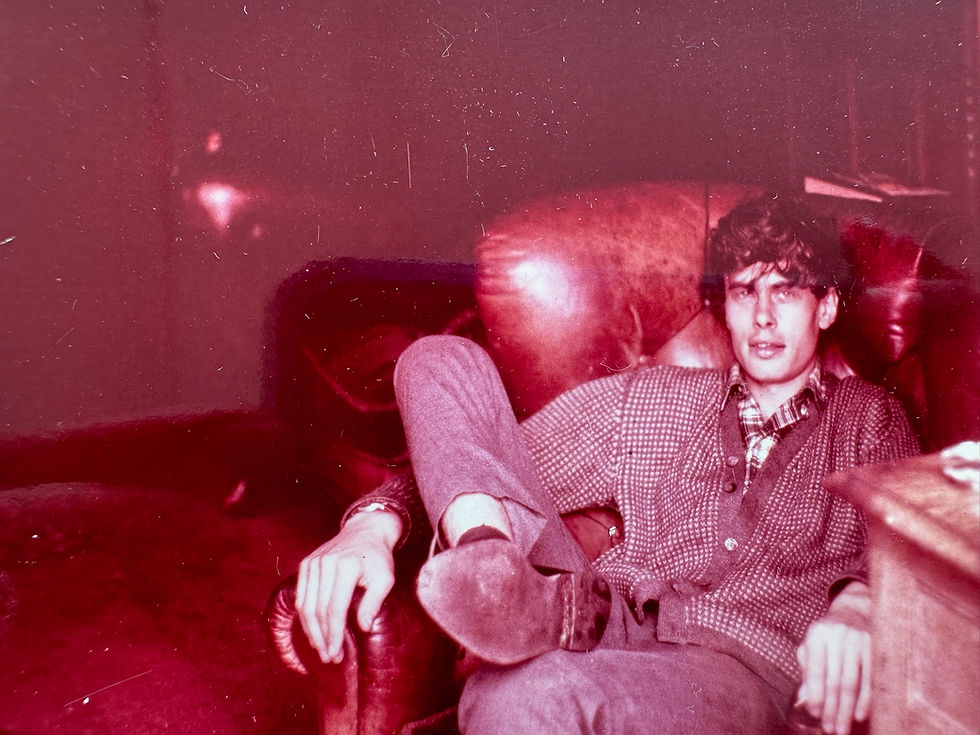

The formative years
Born in Leicestershire, England in 1940, Robert G. Cox’s life has been defined by a relentless, systemic pursuit of form, color, and human justice. From the rigorous studios of the Bath Academy of Art to his decades living by the sea on City Island, New York, Cox has spent over sixty years working at the intersection of fine art and cultural evolution.
Cox’s career began with immediate institutional recognition. While studying at the prestigious Bath Academy of Art, he exhibited with the Young Contemporaries 1959 in London, earning critical review from The London Times. Recognizing his raw talent, legendary Abstract Expressionist Mark Rothko and British painter William Scott personally recommended Cox for study in America. Armed with a full scholarship to Columbia University, Cox moved to New York in 1960, earning his Master’s Degree in 1963. During these electric early years, he shared a New York studio with Malcolm Morley, a close friend and future pioneer of Super Realism.
The Streets of New York & Educational Legacy (1982–Present)
Always attuned to the cultural underground, Cox co-founded the historic Graffiti Art Movement ('Graff Art') in 1982, organizing workshops and galleries that catalyzed the careers of legendary street artists like Crash, Daze, Lady Pink, Star, and Kane—all of whom were permanently immortalized in the seminal documentary Style Wars.
As an educator, Professor Cox has shaped generations of artistic minds. He is a Professor Emeritus of Fine Arts at the College of New Rochelle, taught Art History at the School of Visual Arts (SVA) in New York City, and lectured on early Computer and Information Systems at Fordham University. His deep civic commitment led him to teach within the New York Public School system for decades, concluding his teaching tenure at the high school within Rikers Island. For his radical excellence in public education, he was presented with a formal award by New York City Mayor Michael Bloomberg.
Today, Robert G. Cox creates from his seaside beach cottage on City Island, looking out over the tides of the Atlantic.


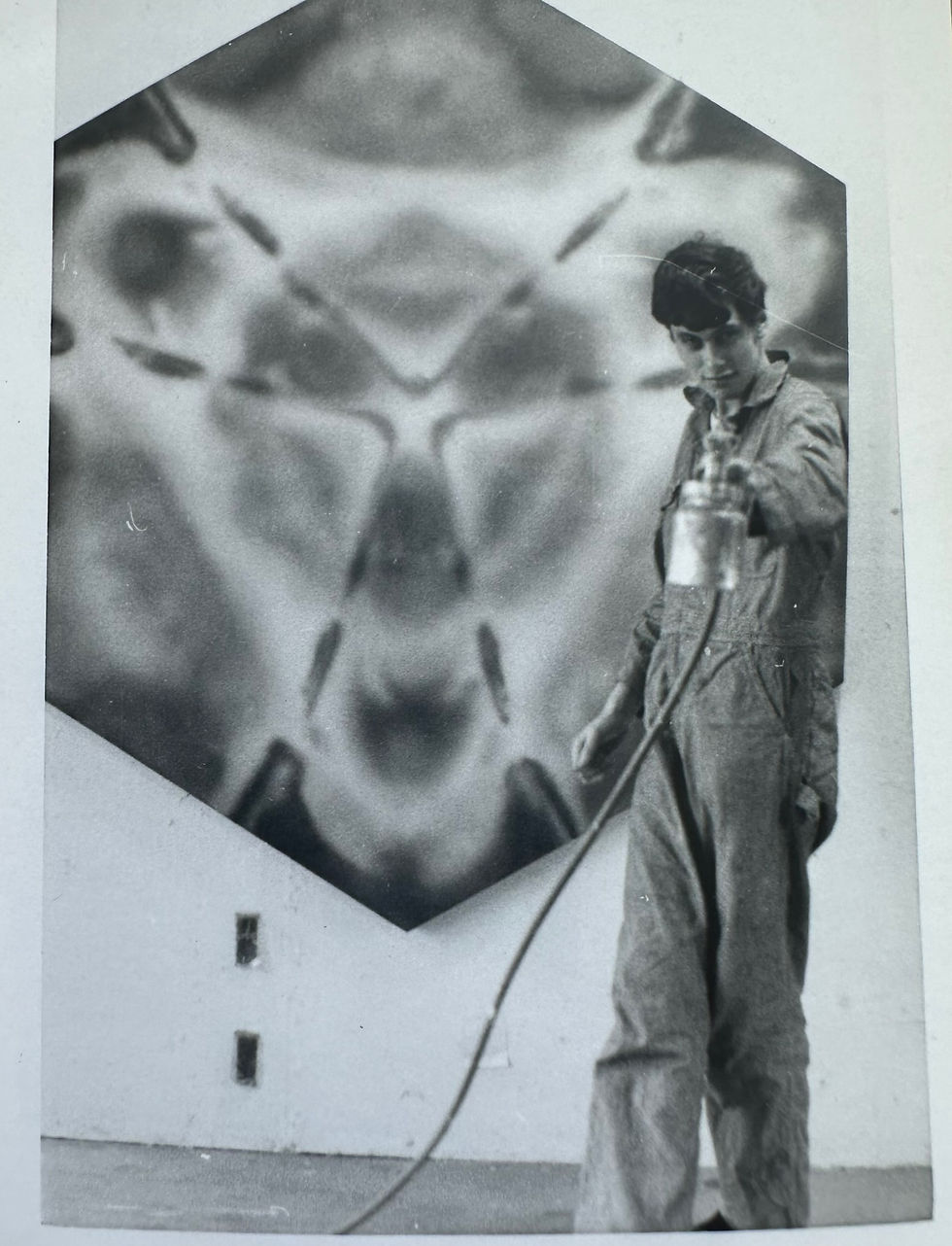

Optical Frontiers & Spiritual Awakenings (1964–1980)
Throughout the 1960s and 70s, Cox exhibited sculpture and paintings across vanguard New York spaces, including the Buecker and Harpsichord, Daniels Gallery, and the Graham Gallery. His work split into two brilliant fronts: rigorous, hard-edge optical geometry that challenged human perception, and vibrant, organic botanical studies—frequently painted on massive, custom-built circular "Tondo" canvases up to 79 inches in diameter.
Concurrently, deep internal exploration led Cox across France, Italy, Ireland, Greece, and India. While in the Himalayas, his immersion into Tibetan Buddhism culminated in authoring essays for Mobil Oil Magazine and directing the historic 1980 documentary, "The Dalai Lama: A Leader in Exile." For his profound humanitarian efforts and work bringing the plight of the Tibetan people to the West, Cox was awarded the Congressional Medal for Helping Humanity.
